
Post-Hedging Blueberry Disease Control: Protect Fresh Cuts Before Infection Begins
After hedging, blueberry plants enter one of the most vulnerable disease windows of the season.
Fresh pruning wounds, rapid regrowth, warm temperatures, high humidity, and frequent moisture can create ideal conditions for disease to enter and spread before symptoms are visible. Once symptoms appear in the field, infection may already be active.
That is why post-hedging disease control should begin immediately.
Magna-Bon CS 2005 helps blueberry growers protect fresh cuts, reduce early disease pressure, and support healthier summer regrowth during high-risk post-hedging conditions.
Why Disease Risk Spikes After Hedging
Hedging is an important management practice, but it also creates fresh entry points for pathogens.
After pruning, blueberry plants are often exposed to:
- Open pruning wounds
- Tender new vegetative growth
- Dense canopy moisture
- Heat and humidity
- Existing disease pressure from previous infections
This combination can increase the risk of diseases such as algal stem blotch, anthracnose, bacterial canker, twig blight, fruit rot, and rust.
If pruning wounds are left unprotected, disease pressure can build quickly before symptoms are easy to detect.
Protect Fresh Cuts With Systemic + Contact Protection
Hedging complete? Don’t leave fresh cuts exposed.
Magna-Bon CS 2005 provides systemic + contact protection designed for high-pressure disease environments following hedging. This OMRI-listed, in-solution copper sulfate pentahydrate helps protect pruning wounds on the plant surface while also moving within plant tissue.
That dual-action protection helps:
- Protect pruning wounds after hedging
- Move into plant tissue through stomata openings
- Support internal protection where infection can begin
- Form a protective copper barrier on the plant surface
- Reduce early disease establishment before symptoms appear
- Support cleaner, healthier summer regrowth
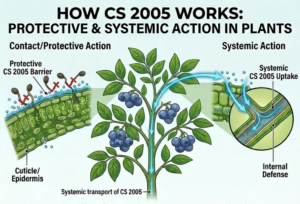
Unlike conventional copper products that remain primarily on the surface, Magna-Bon CS 2005 moves beyond surface-only protection to help blueberry growers stay ahead of disease during one of the most critical windows of the season.
Apply immediately after hedging. Don’t wait for symptoms. Once disease is visible, you’re already behind.
Post-Hedging Blueberry Disease Checklist
After years of working with blueberry growers, we’ve compiled a simple checklist to help determine when protection should begin.
✅ Is hedging complete?
• Pruning finished
• Debris cleared
• Fresh cuts exposed
✅ Has disease risk been high?
• Heat & humidity
• Frequent moisture
• History of disease
✅ Spray program:
• Add Magna-Bon CS 2005
• Use labeled blueberry rates: 100–200 ppm
• Ensure good wound coverage
✅ Timing:
• Apply immediately after hedging
• Don’t delay protection
✅ Follow-up:
• Monitor regrowth
• Continue your summer disease program
Take Control of Post-Hedging Disease Pressure
Post-hedging disease control should not be reactive. It should begin before infection has a chance to establish.
Magna-Bon CS 2005 helps protect fresh pruning wounds, reduce disease pressure, and support healthy regrowth after hedging.
Stop summer disease before it starts. Protect fresh cuts. Support healthier regrowth. Help protect next season’s yield potential.